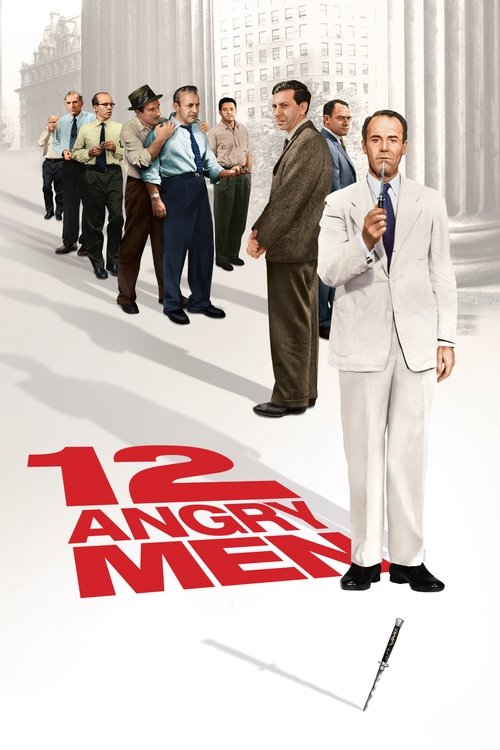
12 Angry Men
The defense and the prosecution have rested and the jury is filing into the jury room to decide if a young Spanish-American is guilty or innocent of murdering his father. What begins as an open and shut case soon becomes a mini-drama of each of the jurors’ prejudices and preconceptions about the trial, the accused, and each other.
Where to watch


DRAMANEWZ.COM Review
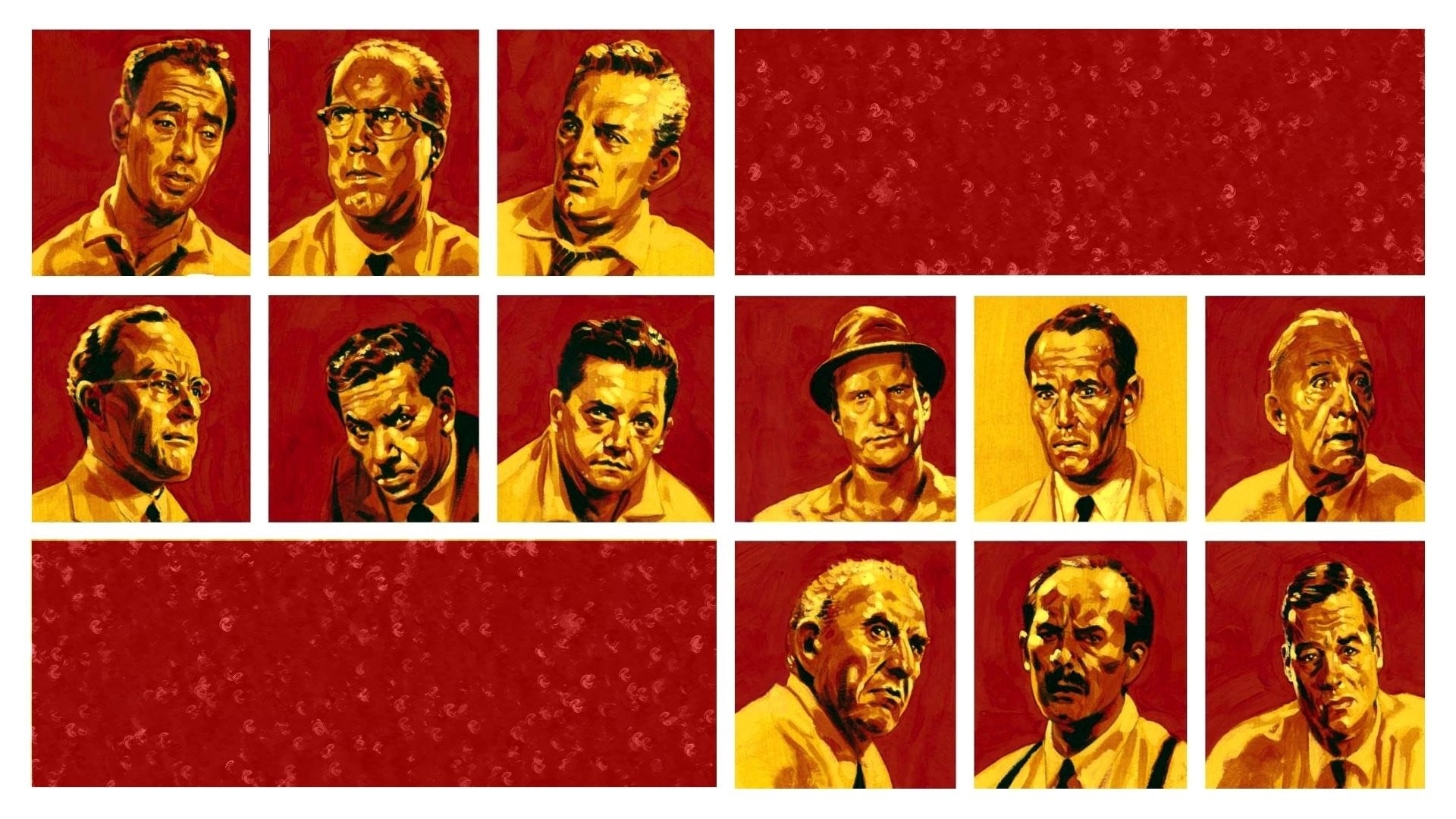
Sidney Lumet’s 1957 masterpiece, *12 Angry Men*, is not merely a film; it is a surgical examination of justice, prejudice, and the fragile architecture of human consensus. Confined almost entirely to a single, sweltering jury room, Lumet orchestrates a masterclass in tension and character development, proving that the most profound dramas often unfold in the most mundane settings.
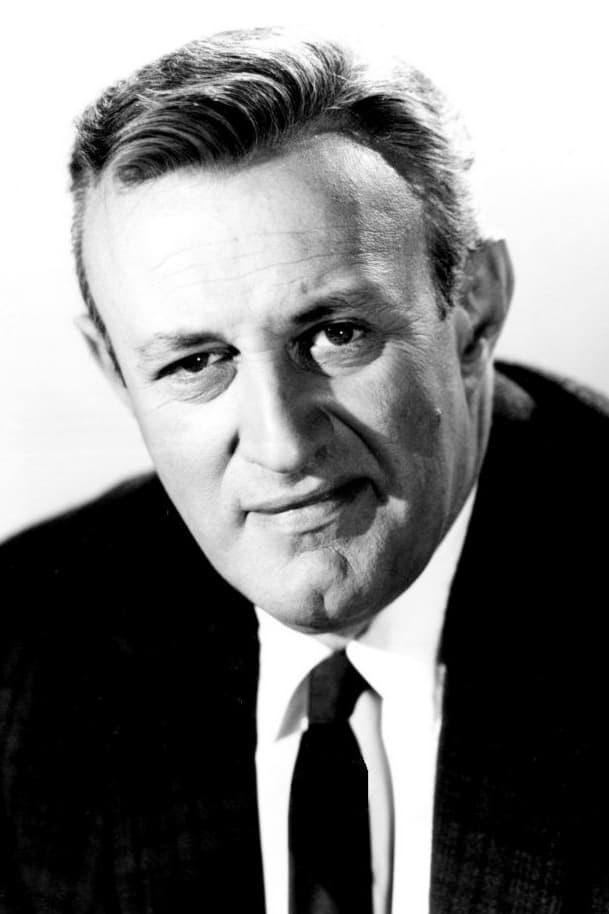
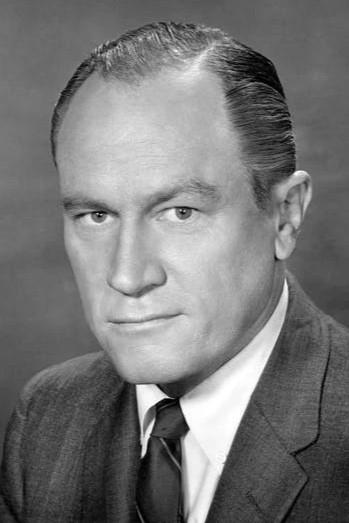
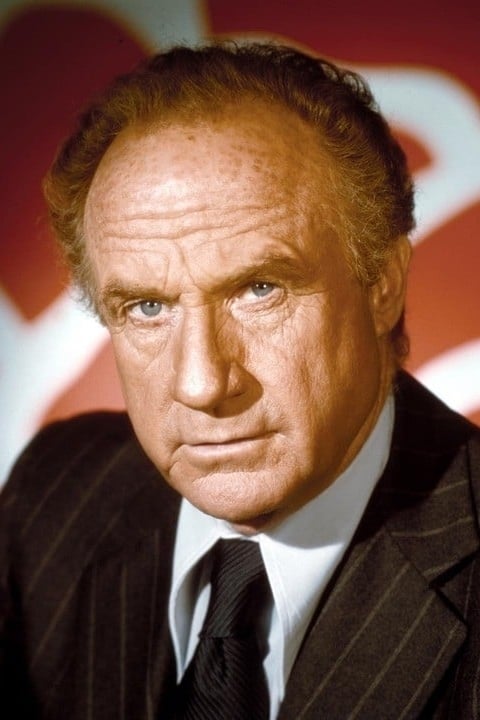
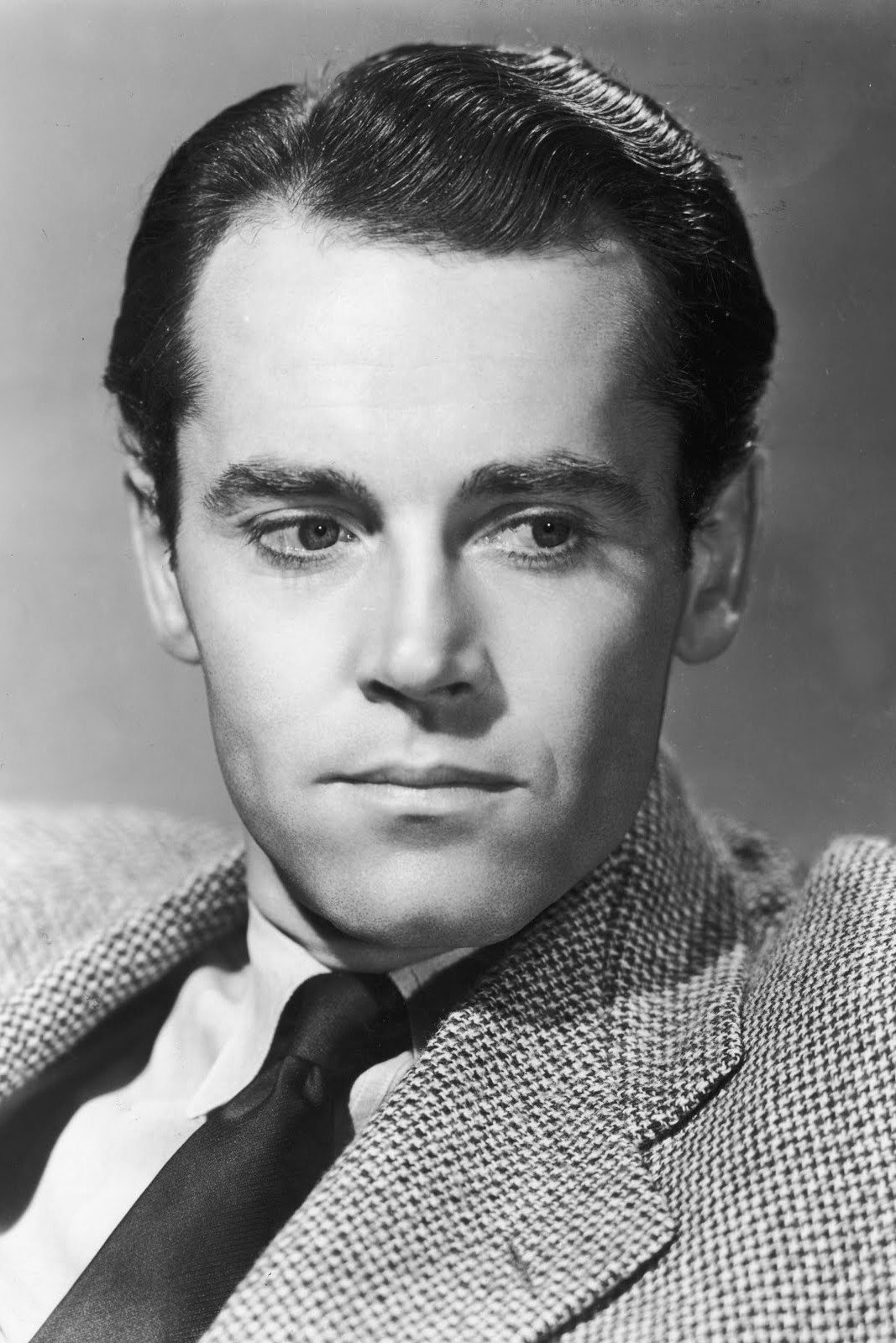
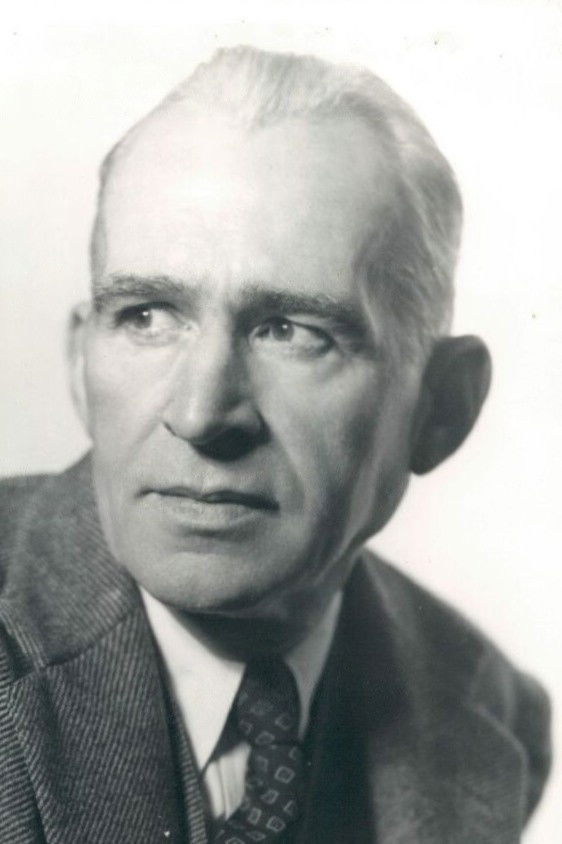
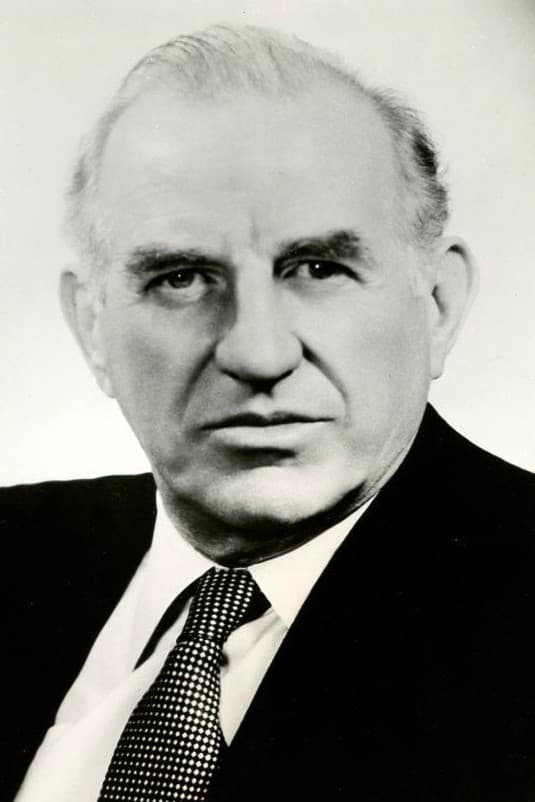
The genius of Reginald Rose's screenplay lies in its daring simplicity. A young Spanish-American man stands accused of murder, and twelve jurors, each a distinct archetype of American society, must decide his fate. What initially appears to be an open-and-shut case quickly unravels under the persistent, quiet questioning of Juror 8, played with understated brilliance by Henry Fonda. Fonda embodies the moral compass, an island of doubt in a sea of certainty, and his performance anchors the film's ethical core. Yet, it is the ensemble that truly shines. Lee J. Cobb’s Juror 3, a man consumed by personal demons, delivers a performance of raw, visceral anger that is both terrifying and tragically human. E.G. Marshall’s Juror 4, the stoic, logical businessman, provides a compelling counterpoint, his rationality slowly chipped away by the emerging ambiguities. Lumet’s direction here is crucial; he uses increasingly tight close-ups and low-angle shots as the narrative progresses, physically compressing the space and mirroring the psychological pressure building within the room. This claustrophobia isn't just a visual trick; it's a thematic statement, trapping the audience alongside the jurors in their moral crucible.
However, while the film's thematic resonance is undeniable, one could argue that its very archetypal nature occasionally borders on the didactic. Each juror, while superbly acted, represents a clear societal flaw – the bigot, the indifferent, the insecure. This occasionally sacrifices nuance for clarity, making some transformations feel less organic and more like a necessary plot device to reach the desired conclusion. The film's steadfast belief in the power of rational discourse, while admirable, can feel a touch idealistic, perhaps underestimating the stubbornness of ingrained prejudice.
Despite these minor quibbles, *12 Angry Men* remains a towering achievement. It is a stark reminder that justice is not a given, but a painstakingly constructed edifice, built on empathy, reason, and the courage to question. It compels us to look beyond the surface, to scrutinize our own biases, and to understand that the truth, much like a jury’s verdict, is often found not in shouting, but in listening. This is cinema as a vital civic exercise, essential viewing for anyone who believes in the power, and the fragility, of human judgment.