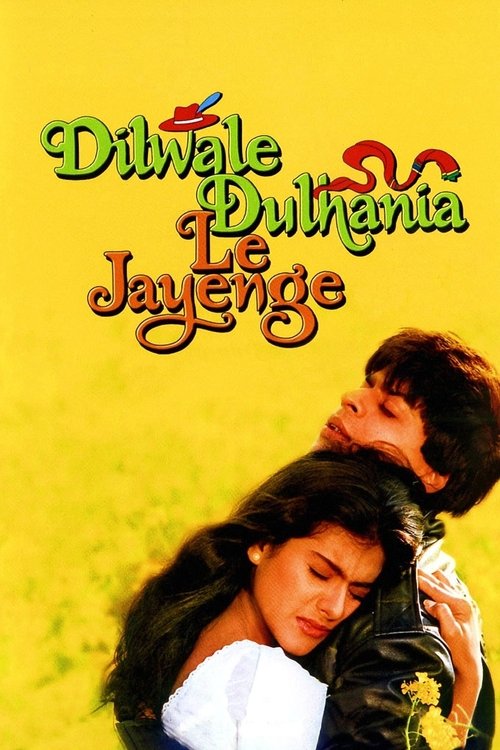
Dilwale Dulhania Le Jayenge
Raj is a rich, carefree, happy-go-lucky second generation NRI. Simran is the daughter of Chaudhary Baldev Singh, who in spite of being an NRI is very strict about adherence to Indian values. Simran has left for India to be married to her childhood fiancé. Raj leaves for India with a mission at his hands, to claim his lady love under the noses of her whole family. Thus begins a saga.









Where to watch


DRAMANEWZ.COM Review
Aditya Chopra’s 1995 epic, *Dilwale Dulhania Le Jayenge*, stands as an undeniable cultural touchstone, a film that, for many, defines an era of Indian cinema. Yet, beneath its glittering surface of romance and iconic songs, lies a complex interplay of traditionalism and burgeoning modernity that warrants a closer, more critical gaze.
The film's enduring appeal often rests on the charismatic performances of its leads. Shah Rukh Khan's Raj, the quintessential carefree NRI, is a masterclass in playful charm, his every smirk and grand gesture meticulously calibrated to endear. Kajol's Simran, in contrast, offers a nuanced portrayal of a young woman caught between filial duty and burgeoning desire. Her internal struggle is rendered with an affecting vulnerability, particularly in scenes where her longing for independence clashes with her father’s rigid adherence to "Indian values." Amrish Puri, as Chaudhary Baldev Singh, is not merely an antagonist; he embodies the patriarchal edifice, his stern gaze and booming voice a formidable obstacle. His performance anchors the film’s central conflict, giving weight to the cultural chasm Raj must bridge.
Chopra's direction, while undeniably effective in crafting a visually lush and emotionally resonant narrative, occasionally leans into a comfort zone of established Bollywood tropes. The European landscapes, while breathtaking, sometimes feel like a picturesque backdrop rather than an integral part of the characters' evolution. The screenplay, for all its romantic sweep, occasionally falters in its pacing, particularly in the elongated second half where dramatic tension could have been more tightly wound. The "mission" Raj undertakes to win Simran under her family's nose, while charming, stretches credulity at times, demanding a suspension of disbelief that even the most ardent romantic might find challenging.
However, where *DDLJ* truly excels is in its exploration of identity. It’s a film about the longing for roots and the desire for freedom, a dichotomy beautifully captured in Simran’s journey. The climax, far from being a simple triumph of love, is a subtle negotiation, a concession from the patriarch that signals a slow, generational shift. It’s not just a love story; it’s a cultural commentary, albeit one wrapped in the most accessible and entertaining of packages. While some narrative beats feel a touch too convenient, the film’s ability to weave together humor, drama, and a genuinely moving exploration of love, family, and tradition solidifies its place not just as popular entertainment, but as a significant work that reflects and shaped a nation's cinematic consciousness. It's a film that, despite its familiar contours, continues to invite reflection on what it means to be modern while holding onto heritage.