Parental Perspectives: 2026 Young Adult Dramas & Family Dynamics
Advertisements

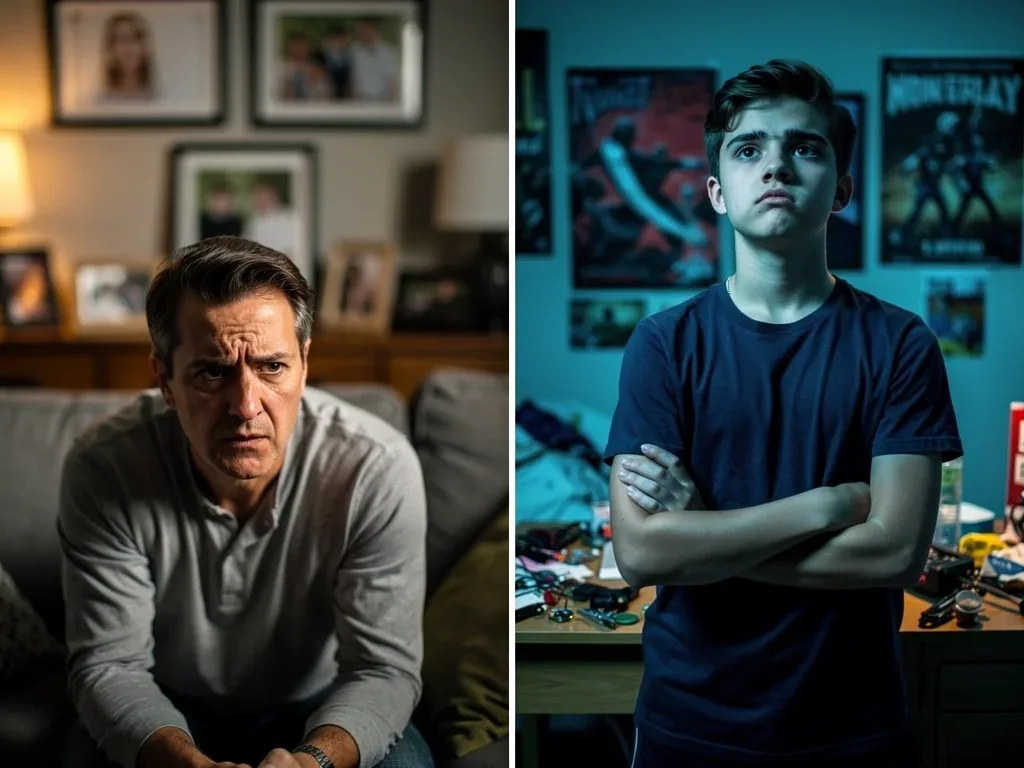
Parental Perspectives: How 2026's Young Adult Dramas Portray Family Dynamics is becoming a meaningful lens for understanding some of the year's most prominent coming-of-age stories. Rather than treating parents only as obstacles, several 2026 series place family relationships directly inside their protagonists' identity, ambitions, and conflicts.
Four documented examples stand out: Crew Girl, Finding Her Edge, My Life with the Walter Boys Season 3, and the 2026 sequel to A Different World. Each approaches the parent-child relationship differently, from scandal and financial pressure to grief, guardianship, family legacy, and the challenge of becoming independent.
These examples do not establish a universal industry trend on their own, but they show how current young adult storytelling can use parents and guardians as active characters whose choices influence the coming-of-age journey rather than simply remaining outside it.
Family Dynamics Have a Larger Role in 2026 YA Drama
Young adult stories have long explored tension between teenagers and authority figures, but several 2026 releases make family circumstances fundamental to the plot itself.
In Crew Girl, a family scandal forces the teenage protagonist to leave her established life. In Finding Her Edge, the survival of a family ice rink and the legacy of a deceased mother place adult responsibilities on a young athlete.
Meanwhile, My Life with the Walter Boys Season 3 develops the role of guardians Katherine and George Walter, while A Different World follows a college freshman trying to establish an identity separate from two parents whose history already defines her new campus.
Parents Are Part of the Conflict, Not Just Background Characters
The parental figures in these dramas do not all perform the same narrative function. Some provide stability, while others create pressure, carry family history, or become part of the crisis their children must navigate.
That distinction matters because a parent can simultaneously provide emotional support and create expectations that a younger character must learn to manage.
The result is a broader view of coming of age in which independence does not necessarily mean escaping family, but learning how to define oneself within relationships that remain important.
Family Structure Varies Across the Four Examples
The 2026 examples also avoid presenting one model as the only meaningful type of family. Crew Girl begins with Teagan Tao and her mother rebuilding their lives after a scandal involving Teagan's father.
My Life with the Walter Boys centers partly on guardianship, with Katherine Walter becoming Jackie's guardian after the death of Jackie's immediate family, while Finding Her Edge explores sisters attempting to preserve their mother's legacy.
A Different World takes another approach by focusing on a young adult leaving home for college while still living under the cultural and emotional shadow of her parents' accomplishments.
Example 1: Crew Girl and a Family Scandal
Netflix's Crew Girl follows 16-year-old rower Teagan Tao after a scandal involving her family destroys the stability of her life in Southern California.
Teagan relocates across the country with her mother, Ella, and enrolls at Easton Prep, where joining an elite boys' rowing program creates a new set of social and competitive challenges.
The family storyline is not merely a pretext for changing locations. Official Netflix material establishes that Teagan and Ella are both searching for answers and a fresh start after the revelation involving Teagan's father.
Ella Tao Represents a Parent Rebuilding at the Same Time as Her Child
Ella's role gives the story a useful parental dimension because she is not standing outside Teagan's upheaval; she is experiencing the consequences of the same family crisis.
The show's episode descriptions also establish practical pressures around Teagan's education, including Ella's concern over tuition at the elite school.
This means the parent-child relationship operates through both emotional disruption and financial reality, giving Teagan's reinvention a family context rather than presenting it solely as a teenage sports story.
Other Parents Add Different Forms of Pressure
Crew Girl does not limit parental conflict to the Tao family. Netflix's official character guide describes Josh Regis' father Richard as a former rowing champion who places substantial athletic expectations on his son.
The series also includes Coach Matt Hayden as a widowed father raising a teenage daughter, along with Senator DeeDee Garner and other parents whose histories intersect with their children's lives.
That structure allows the drama to compare several parental approaches instead of treating every teen-parent conflict as fundamentally identical.
Example 2: Finding Her Edge and the Weight of Family Legacy
Finding Her Edge is a 2026 YA sports drama built around Adriana Russo, a former competitive ice dancer who returns to skating while her family struggles to preserve its Ontario ice rink.
Her decision is connected not only to competition and romance but also to the legacy of her mother, a gold medalist who died two years earlier.
Showrunner Jeff Norton explicitly described the series as a layered family drama about a fractured family attempting to find its way back together, making family relationships part of the intended structure rather than an incidental subplot.
A Parent Can Shape the Story Even After Death
Adriana's mother is absent from the present-day family, yet her reputation and accomplishments continue to influence what her daughters believe they must preserve.
Adriana therefore carries responsibilities that are simultaneously personal, athletic, financial, and emotional as she attempts to help save the family rink.
This creates a different kind of parental perspective: the drama examines how a parent's values and achievements can remain powerful forces in a young person's decisions even after that parent is gone.
Family Responsibility Competes with Personal Choice
Netflix's description emphasizes that Adriana feels the weight of responsibility as she attempts to preserve both the rink and her mother's Olympic legacy.
Her own future cannot easily be separated from what the Russo family has built, creating tension between individual development and inherited expectations.
That makes Finding Her Edge useful for examining how YA dramas can portray family loyalty as both a source of motivation and a source of pressure.
Example 3: My Life with the Walter Boys Season 3 and Guardianship
Season 3 of My Life with the Walter Boys premiered on Netflix on August 6, 2026 and begins after Walter family patriarch George suffers a serious health scare.
The event affects the entire household and gives the season a stronger focus on maturity, responsibility, and what happens when the adult figure normally associated with stability suddenly becomes vulnerable.
The family structure is also distinctive because Jackie is living with the Walters after Katherine, who was Jackie's mother's close friend, became her guardian following the death of Jackie's family.
Katherine Walter Functions as Both Mother and Guardian
Netflix describes Katherine as balancing her marriage, 10 children, veterinary career, ranch life, and responsibility for Jackie.
In Season 3, she must also help George recover while continuing to guide the younger members of the household through their individual problems.
Her character demonstrates how a YA series can give an adult significant responsibility without making that adult either flawless or narratively irrelevant.
George's Health Scare Changes the Family Balance
George begins Season 3 adapting to a new reality after the medical emergency that ended the previous season.
Netflix's cast material specifically describes the event as destabilizing for the Walter family because George is closely connected to both the emotional structure of the household and the operation of the ranch.
His recovery therefore creates a family storyline about vulnerability and changing responsibility alongside the romantic conflicts involving Jackie, Cole, and Alex.
Example 4: A Different World and Parental Legacy
The new A Different World series premiered on Netflix on September 24, 2026, returning audiences to the fictional Hillman College with a new generation of students.
At its center is Deborah Wayne, the youngest daughter of original characters Dwayne Wayne and Whitley Gilbert, who begins her freshman year at the same historically Black college attended by her parents.
The premise makes parental legacy central from the beginning: Deborah is not entering an unfamiliar institution anonymously but arriving at a campus where her family history already has meaning.
Deborah Must Separate Her Own Path from Her Parents' History
Netflix describes Deborah as a creative free spirit who has not followed the same highly focused trajectory as other members of her family.
After being rejected by her preferred school, Tisch, she enters Hillman while her worried parents attempt to guide her college experience.
The tension is therefore not based on absent or uncaring parents, but on the difficulty of becoming independent while loving parents have strong ideas about how to help.
Dwayne and Whitley Connect Two Generations of the Story
Kadeem Hardison and Jasmine Guy return as Dwayne Wayne and Whitley Gilbert, connecting the new series directly with the original A Different World.
Their presence allows the sequel to explore what happens when characters once depicted as young adults become parents watching their own daughter encounter similar questions about identity, relationships, and adulthood.
This generational continuity makes the series particularly useful for examining parental perspective because audiences familiar with the original can understand both sides of the parent-child relationship.

Parental Expectations Are More Complex Than Simple Control
Across these four dramas, parental expectations appear in different forms: athletic pressure, family responsibility, concern about education, preservation of a family legacy, and attempts to guide children through major transitions.
It would be inaccurate to suggest that all these stories frame parental involvement negatively. Support and pressure can coexist within the same relationship.
That complexity provides stronger dramatic material than a simple division between rebellious teenagers and unreasonable adults.
Pressure Can Come from Achievement and Legacy
In Crew Girl, athletic accomplishments within older generations can influence what younger rowers are expected to achieve.
In Finding Her Edge, the achievements of Adriana's late mother create a legacy that affects both the family's finances and Adriana's understanding of responsibility.
A Different World offers a similar theme in another setting, as Deborah enters the institution where her parents already established their own history.
Family Crisis Can Accelerate Coming of Age
Several of the verified 2026 examples begin or develop through events that force young characters to accept responsibilities more quickly than expected.
Teagan experiences the collapse of her previous family life, Adriana assumes responsibility for preserving a family institution, and the Walter children confront the vulnerability of their father.
These stories use family disruption to test how young characters respond when the adults around them cannot simply solve every problem.
Growing Up Does Not Mean Eliminating the Family
The protagonists still pursue romance, education, friendship, sports, and individual ambitions, but those goals exist within continuing family relationships.
This is an important distinction because independence in these dramas is generally portrayed as learning to make choices rather than cutting parents or guardians completely out of the story.
The family remains a source of history, responsibility, conflict, support, or some combination of all four.
Modern YA Dramas Also Expand the Meaning of Parenthood
The 2026 examples include biological parents, a legal guardian, a widowed father, grieving family members, and parents whose adult children are moving into college life.
This variety makes it difficult to support the original article's broad claim that one particular family model is replacing the traditional nuclear family across the entire YA television industry.
What the documented examples do support is a narrower conclusion: current YA dramas have room for multiple family arrangements and different forms of adult responsibility.
Guardianship Is Particularly Important in My Life with the Walter Boys
Jackie's relationship with Katherine is significant because Katherine occupies a parental role without replacing the emotional history of Jackie's deceased parents.
The Walter household becomes both a new family environment and a setting in which Jackie must continue building an identity after major loss.
This allows the series to portray guardianship as an ongoing relationship rather than simply the logistical explanation for why the protagonist moved to Colorado.
Technology Is Present, but Parental Surveillance Is Not a Verified 2026 Trend
The original article used an alleged series titled Digital Echoes to argue that parental surveillance was one of the defining themes of 2026 YA drama.
I could not verify that series or the specific storyline described, so it should not be used as evidence of an industry-wide trend.
Technology, social media, and privacy remain established concerns in youth-oriented storytelling, but a factual article should connect those themes to identifiable titles before presenting them as a major 2026 development.
Climate Activism Example Was Also Unsupported
The original The Green Line example portrayed parents reacting to teenage climate activism, protests, and possible legal consequences.
I could not verify a 2026 YA series matching that description, which means its characters and family conflicts should not be reported as an actual production.
Climate anxiety and activism may appear in contemporary youth media, but the existence of the broader topic does not validate an invented case study.
What the Four Verified Examples Actually Have in Common
Crew Girl, Finding Her Edge, My Life with the Walter Boys, and A Different World all use family circumstances to shape major choices made by younger protagonists.
They differ substantially in genre and setting, moving from elite high school rowing and competitive ice dancing to ranch life and an HBCU campus.
That variation makes their common emphasis on family more notable while avoiding the unsupported conclusion that every 2026 YA series follows the same formula.
Four Different Family Pressures
Crew Girl examines the fallout of a family scandal, while Finding Her Edge builds its family story around grief, financial pressure, and inherited athletic legacy.
My Life with the Walter Boys explores guardianship and the destabilizing effect of a parent's health crisis on a large household.
A Different World shifts the issue toward independence and legacy as a college student attempts to define herself beyond two accomplished parents.
Why These Family Stories Matter to YA Storytelling
Coming-of-age stories depend on transitions, and families often determine the conditions under which those transitions take place.
Parents and guardians can influence housing, education, finances, expectations, cultural identity, and emotional stability even when the primary protagonist is approaching adulthood.
Making those adult characters more developed gives writers additional ways to explore why young characters make particular decisions rather than presenting adolescence as an isolated experience.
Parental Perspective Does Not Mean the Story Stops Being YA
A series can give meaningful attention to adults without shifting its central point of view away from young characters.
The four examples continue to focus primarily on protagonists navigating identity, romance, competition, education, and growing independence.
The parental perspective adds context to those conflicts rather than replacing the young adult perspective at the center of the narrative.
Audience Response Should Be Described Carefully
The original article claimed that these portrayals were producing greater empathy across generations and that audiences were clearly demanding more complex parental characters.
Those are plausible interpretations, but demonstrating them would require audience research, surveys, or other evidence beyond the existence of the shows themselves.
A safer conclusion is that producers and streaming platforms are continuing to release YA dramas in which family relationships occupy substantial narrative space.
What to Watch Next
Crew Girl has already been renewed for a second season, Netflix confirmed on September 22, 2026, providing another opportunity to develop the relationships between its teens and their parents.
Finding Her Edge has also moved into production on Season 2, while the consequences of My Life with the Walter Boys Season 3 leave several family and relationship storylines unresolved.
A Different World has only just premiered on September 24, making its first season the newest of these four examples and an important title to monitor as audiences respond to Deborah Wayne's relationship with her parents and their Hillman legacy.
Confirmed Developments Matter More Than Predictions
Renewals, production announcements, release dates, official episode descriptions, and creator interviews provide a stronger basis for future coverage than predicting which themes will dominate television.
For example, Netflix has confirmed Crew Girl Season 2 and that production on Finding Her Edge Season 2 is underway.
Those developments can be monitored directly without claiming that future seasons will necessarily deepen a particular parental storyline until additional details are released.
2026 YA Drama | Verified Family Dynamic |
|---|---|
Crew Girl | Teagan and her mother rebuild their lives after a family scandal, while other parents create different forms of athletic and social pressure. |
Finding Her Edge | Adriana and her family confront grief, financial pressure, and the responsibility of preserving their late mother's skating legacy. |
My Life with the Walter Boys Season 3 | Katherine balances motherhood and guardianship while George's health crisis changes the emotional balance of the Walter household. |
A Different World | Deborah Wayne enters her parents' alma mater and must build her own identity while Dwayne and Whitley try to guide her. |
Frequently Asked Questions About Parental Perspectives in 2026 YA Dramas
Are Echoes of Tomorrow, The Crossroads, Digital Echoes, and The Green Line verified examples?
No reliable evidence supports the four productions in the roles described by the original article. Verified 2026 alternatives include Crew Girl, Finding Her Edge, My Life with the Walter Boys Season 3, and A Different World.
Which 2026 YA drama directly centers on a family scandal?
Crew Girl begins after a scandal involving Teagan Tao's family forces the 16-year-old rower and her mother Ella to relocate and rebuild their lives.
Which series most directly explores family legacy?
Finding Her Edge uses the Russo family's ice rink and the legacy of Adriana's late champion mother as major sources of responsibility, while A Different World explores legacy through Deborah Wayne attending her parents' alma mater.
How does My Life with the Walter Boys portray a nontraditional parental relationship?
Katherine Walter is Jackie's legal guardian after the death of Jackie's family, making guardianship and the formation of a new family unit important parts of the series.
How does A Different World use parental perspective?
Deborah Wayne begins college at Hillman while her parents, Dwayne and Whitley, attempt to guide her through an institution they know personally, creating tension between family legacy and individual identity.
Are these four shows proof of an industry-wide trend?
No. They are verified examples showing that family dynamics are prominent in several 2026 YA dramas, but four titles alone are not sufficient evidence to establish a universal television industry trend.
Looking Ahead: Family Dynamics in Young Adult Drama
The most defensible conclusion from 2026's YA slate is not that television has completely reinvented parental characters, but that several major releases are giving family relationships meaningful narrative weight.
Related coverage of young adult dramas and teen friendship series can provide additional context on how coming-of-age storytelling is developing across different markets.
For audiences following Parental Perspectives in 2026 Young Adult Dramas, the strongest examples are those where the parents, guardians, and family histories can be traced directly to documented characters and storylines rather than hypothetical productions or generalized trends.