Addressing Tough Topics: 4 YA Dramas in 2026 Spark Conversations
Advertisements
YA dramas in 2026 are increasingly exploring difficult subjects through stories about mental health, identity, family conflict, activism, and digital life.
These themes allow young audiences to encounter complex situations through characters whose choices, struggles, and relationships can encourage meaningful reflection.
Rather than offering simple answers, many contemporary youth dramas use difficult topics to create conversations about experiences affecting teenagers today.
The Evolving Landscape of YA Dramas in 2026
The landscape of YA dramas continues expanding beyond traditional stories centered only on romance, school, and friendships.
More series are incorporating social pressures, emotional struggles, family instability, and identity questions directly into their central character arcs.
This broader approach gives young audiences opportunities to engage with difficult subjects through narratives designed primarily for entertainment.
Why Tough Topics Matter in Youth Storytelling
Stories can provide a starting point for conversations about subjects that teenagers or families may otherwise find difficult to discuss.
Characters experiencing recognizable challenges can also help viewers understand perspectives that differ considerably from their own lives and circumstances.
The value comes from thoughtful storytelling that acknowledges complexity without suggesting that every difficult situation has one simple solution.
Mental Health Portrayals With Greater Depth
Mental health has become an increasingly visible theme in YA dramas in 2026, appearing through several different character experiences.
Stories may address anxiety, depression, trauma, isolation, or emotional pressure while showing how those experiences affect relationships and daily life.
Responsible portrayals can encourage discussion, although fictional television should never replace professional information or individualized mental health support.
Challenging Stigma and Promoting Dialogue
Characters who openly struggle with emotional difficulties can make conversations about mental health feel less unusual or socially isolated.
Showing support from friends, family members, counselors, or professionals can also demonstrate that seeking help may involve several different resources.
These narratives work best when they avoid reducing a character to a diagnosis or presenting recovery as an instant transformation.
More nuanced portrayals of emotional and psychological struggles.
Greater emphasis on support networks and professional assistance.
Attention to social pressures affecting adolescent well-being.
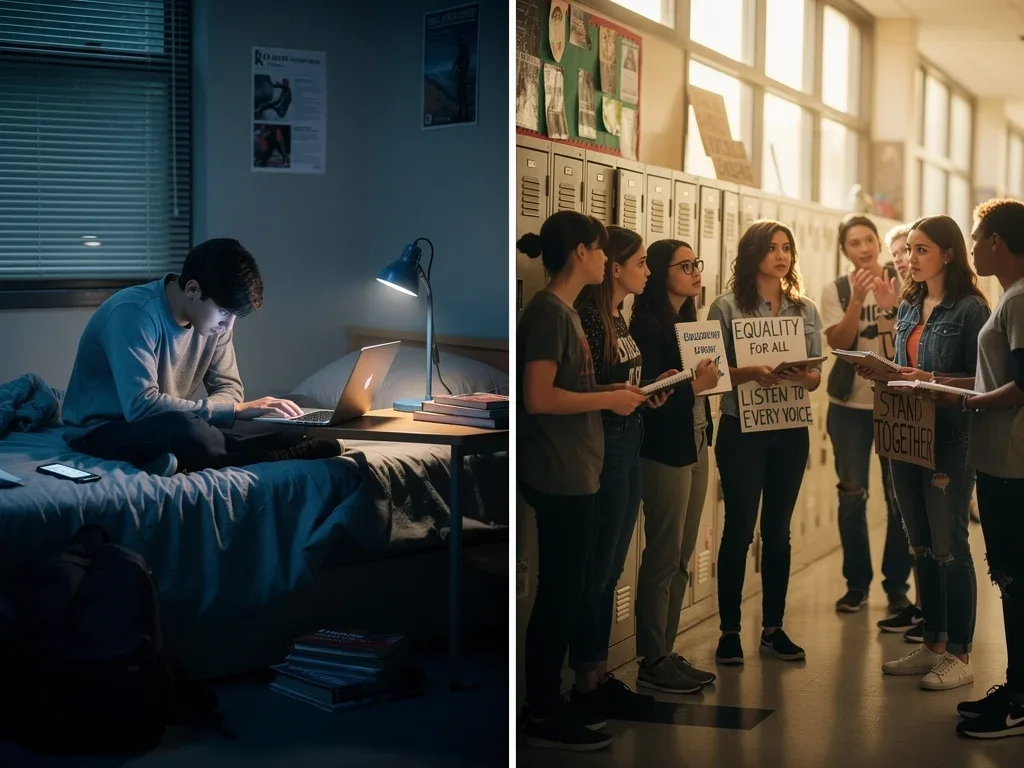
Social Justice and Youth Activism
Social justice themes allow youth dramas to explore how teenagers respond to inequality, environmental concerns, discrimination, and community conflicts.
Characters may organize, protest, communicate online, or challenge institutions while also facing disagreement about strategy, priorities, and consequences.
These storylines can introduce civic questions without requiring every character or viewer to reach the same political or social conclusion.
Navigating Activism and Identity
Activism often intersects with identity because personal experiences can influence which issues characters consider urgent or meaningful.
Strong stories can show both collective action and disagreement within movements, reflecting the fact that advocacy rarely follows one uniform path.
They can also explore fatigue, conflict, and personal sacrifice alongside the sense of purpose that may motivate young people to participate.
Exploration of different identities within social movements.
Portrayal of individual and collective forms of participation.
Attention to emotional pressure associated with sustained activism.
Exploring Complex Family Dynamics and Trauma
Family relationships provide another setting where youth dramas can address instability, conflict, separation, addiction, or unresolved emotional experiences.
These stories often move away from idealized households and show how different family members interpret the same events in different ways.
For young viewers, realistic family conflict can make fictional characters feel more recognizable while opening conversations about boundaries and support.
Unpacking Generational Impact and Healing
Some narratives explore how unresolved experiences from older generations continue influencing communication, expectations, and behavior within a household.
Characters may gradually recognize patterns they want to change, creating storylines centered on communication, responsibility, and healthier relationships.
These journeys can acknowledge resilience without suggesting that reconciliation is always easy, immediate, or appropriate in every situation.
Realistic portrayals of different family structures and conflicts.
Exploration of communication breakdowns and attempts at reconciliation.
Recognition of friends and support networks outside the household.
Navigating Identity and Self-Discovery
Identity remains central to youth storytelling because adolescence often involves questioning belonging, expectations, relationships, and personal values.
Modern YA dramas can explore cultural background, race, gender, sexuality, family expectations, and other elements shaping a character's self-understanding.
Greater variety in these stories can help audiences encounter experiences that were historically less visible in mainstream youth entertainment.
Embracing Authenticity and Challenging Norms
Characters may face pressure to conform to expectations from friends, family, school environments, or wider cultural communities.
Their decisions can explore the tension between seeking acceptance and developing an identity that feels personally meaningful and sustainable.
Rather than treating self-discovery as one decisive moment, stronger narratives often present it as a gradual and sometimes uncertain process.
Representation of different LGBTQ+ identities and experiences.
Exploration of racial, ethnic, and cultural identity.
Stories examining social expectations and individual self-expression.
The Role of Technology and Digital Life
Technology influences friendships, reputation, privacy, school life, activism, and relationships, making digital experiences central to contemporary youth narratives.
YA dramas can explore online harassment, social comparison, privacy problems, misinformation, or the lasting consequences of digital behavior.
They can also show positive uses of technology, including community building, creative expression, communication, and access to helpful information.
Confronting Cyberbullying and Online Pressures
Cyberbullying can continue beyond school hours because messages, images, or rumors may circulate rapidly across digital platforms.
Stories about these situations can examine the emotional effects on victims while showing how friends, families, and institutions respond.
They may also encourage viewers to think about privacy, digital boundaries, reporting tools, and responsible online behavior.
Depictions of online harassment and its emotional effects.
Exploration of privacy and personal information online.
Positive uses of digital platforms for connection and participation.
Substance Abuse and Addiction
Substance use is another sensitive subject that youth dramas may approach through characters experiencing peer pressure, dependency, or family consequences.
More careful storytelling can examine factors surrounding substance use instead of presenting addiction solely as a dramatic plot device.
These narratives can also show that recovery may involve professional care, support networks, setbacks, and long-term changes rather than instant solutions.
Understanding Prevention and Recovery
Peer pressure, emotional distress, social environments, and personal circumstances can all appear within stories examining risky substance use.
Characters may experience consequences affecting school, relationships, health, or family life, showing how problems can extend beyond one individual.
Recovery-focused narratives can emphasize support and intervention while avoiding the implication that one approach works equally well for everyone.
Exploration of factors that can contribute to substance use.
Attention to consequences affecting individuals and relationships.
Recognition of professional support and long-term recovery processes.
Ethical Dilemmas and Moral Ambiguity
YA dramas can also challenge viewers by placing characters in situations where competing responsibilities make the correct choice difficult to determine.
Academic pressure, loyalty, revenge, consent, privacy, and friendship can all create conflicts without simple answers or perfect outcomes.
These situations encourage viewers to consider motivation and consequences rather than dividing every character immediately into heroes and villains.
Confronting Difficult Choices and Consequences
Characters may make decisions based on fear, loyalty, ambition, insecurity, or incomplete information, producing consequences they did not anticipate.
Examining those motivations can make ethical conflicts more meaningful because viewers understand why different characters reach different conclusions.
The strongest narratives allow those consequences to develop naturally instead of resolving difficult moral questions immediately after they appear.
Presentation of ethical challenges relevant to young people.
Exploration of intended and unintended consequences.
Attention to different perspectives within morally complex situations.
How YA Dramas Can Encourage Conversations
Television cannot resolve difficult social or personal issues, but it can provide shared situations that viewers use to begin discussions.
Families, friends, or educators may find it easier to discuss an issue first through a fictional character before addressing personal experiences.
This conversational role is one reason difficult themes remain relevant within YA dramas in 2026 and broader youth storytelling.
Creating Space for Different Perspectives
A strong drama can present disagreement between believable characters without automatically framing one perspective as simple or obviously correct.
This structure gives audiences room to examine motivations, compare consequences, and consider why individuals respond differently to similar circumstances.
Discussion becomes more valuable when viewers can question a character's choices without assuming the story provides one universal answer.
The Future of Youth Storytelling Beyond 2026
More complex youth storytelling is likely to remain relevant as audiences continue seeking characters and situations that reflect contemporary experiences.
The future of teen dramas may increasingly combine entertainment with themes traditionally treated as secondary or avoided entirely.
How successfully these stories work will depend on writing quality, research, character development, and the care given to sensitive subject matter.
Friendships and Changing Social Relationships
Friendship remains particularly important because young characters often rely on peers while navigating identity, conflict, school, and family pressure.
Modern YA dramas can explore friendships that change over time rather than presenting loyalty as permanent or uncomplicated.
These relationships provide another way to examine boundaries, communication, trust, jealousy, support, and the consequences of personal growth.
Key Topic | Brief Description |
|---|---|
Mental Health | Stories exploring emotional struggles, support, and stigma. |
Social Justice | Youth participation in activism and community issues. |
Family Dynamics | Complex relationships, conflict, trauma, and changing households. |
Identity and Technology | Self-discovery alongside digital pressures and online relationships. |
Frequently Asked Questions About YA Dramas in 2026
Why are difficult topics common in modern YA dramas? ▼
They allow writers to explore experiences relevant to young audiences while creating stories that can encourage reflection and conversation.
How can YA dramas approach mental health responsibly? ▼
Responsible portrayals avoid simplistic stereotypes, acknowledge different experiences, and distinguish fictional storytelling from professional mental health guidance.
What role does social justice play in youth dramas? ▼
These themes can explore activism, disagreement, community involvement, and the personal consequences associated with participating in social movements.
Are all YA dramas appropriate for every teenager? ▼
No. Suitability depends on the viewer, age, maturity, and subjects covered, so content information can help families make individual decisions.
How might these themes influence future youth storytelling? ▼
They may encourage writers to continue developing more complex characters and narratives that reflect a wider range of adolescent experiences.
Looking Ahead: The Enduring Impact
YA dramas in 2026 demonstrate how youth entertainment can combine familiar coming-of-age stories with difficult emotional and social subjects.
Their strongest contribution is not providing definitive answers, but creating characters and situations that encourage viewers to examine different perspectives.
As YA content continues evolving, thoughtful representation and strong storytelling will remain essential to making difficult themes genuinely meaningful.